
Last updated November 15, 2026
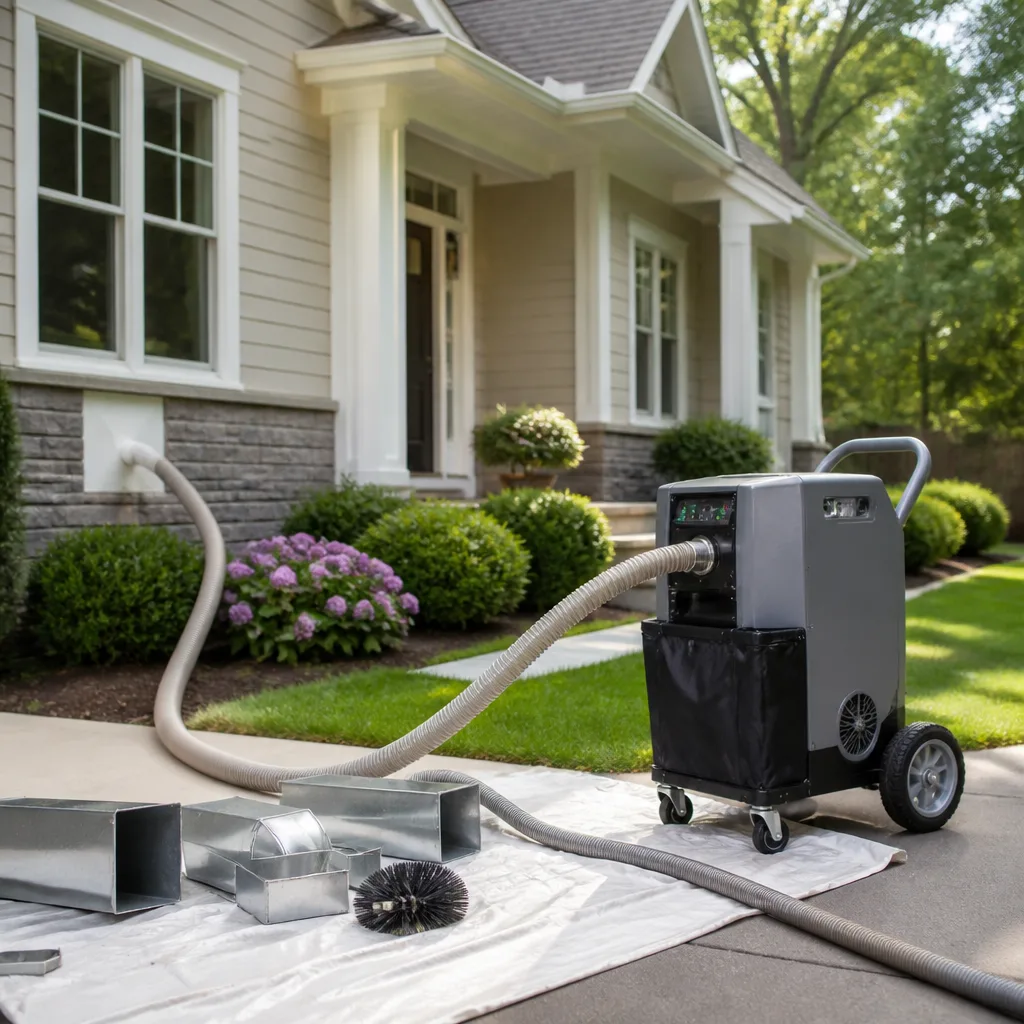 Whole-home duct cleaning
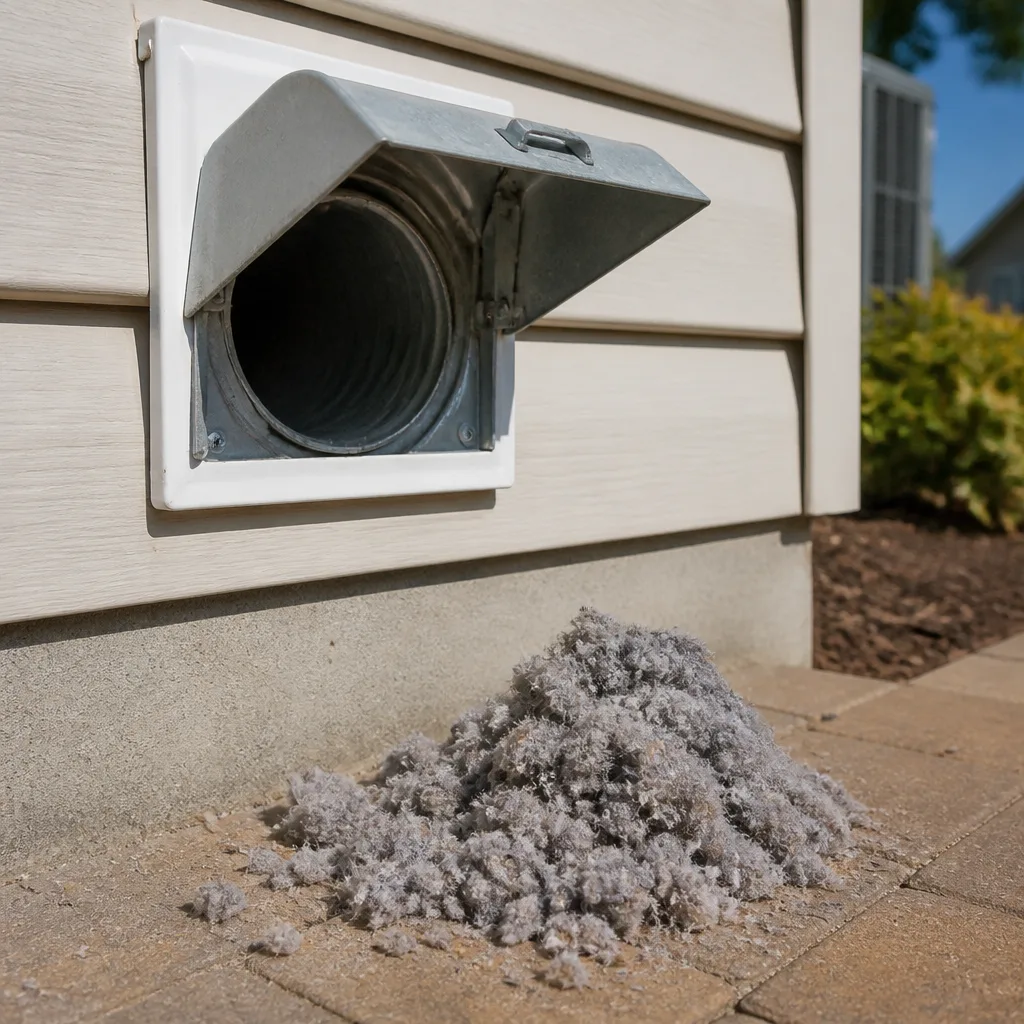 Dryer vent cleaning
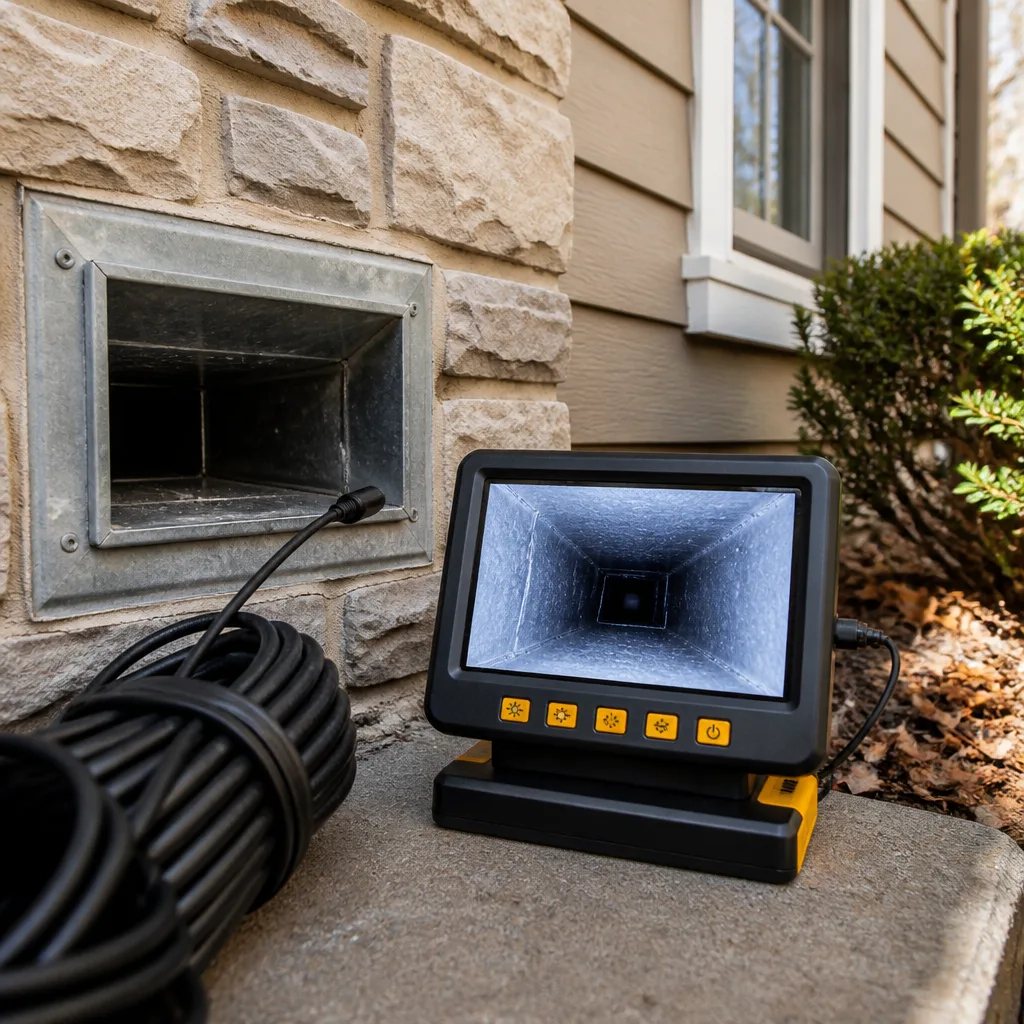 Camera inspection
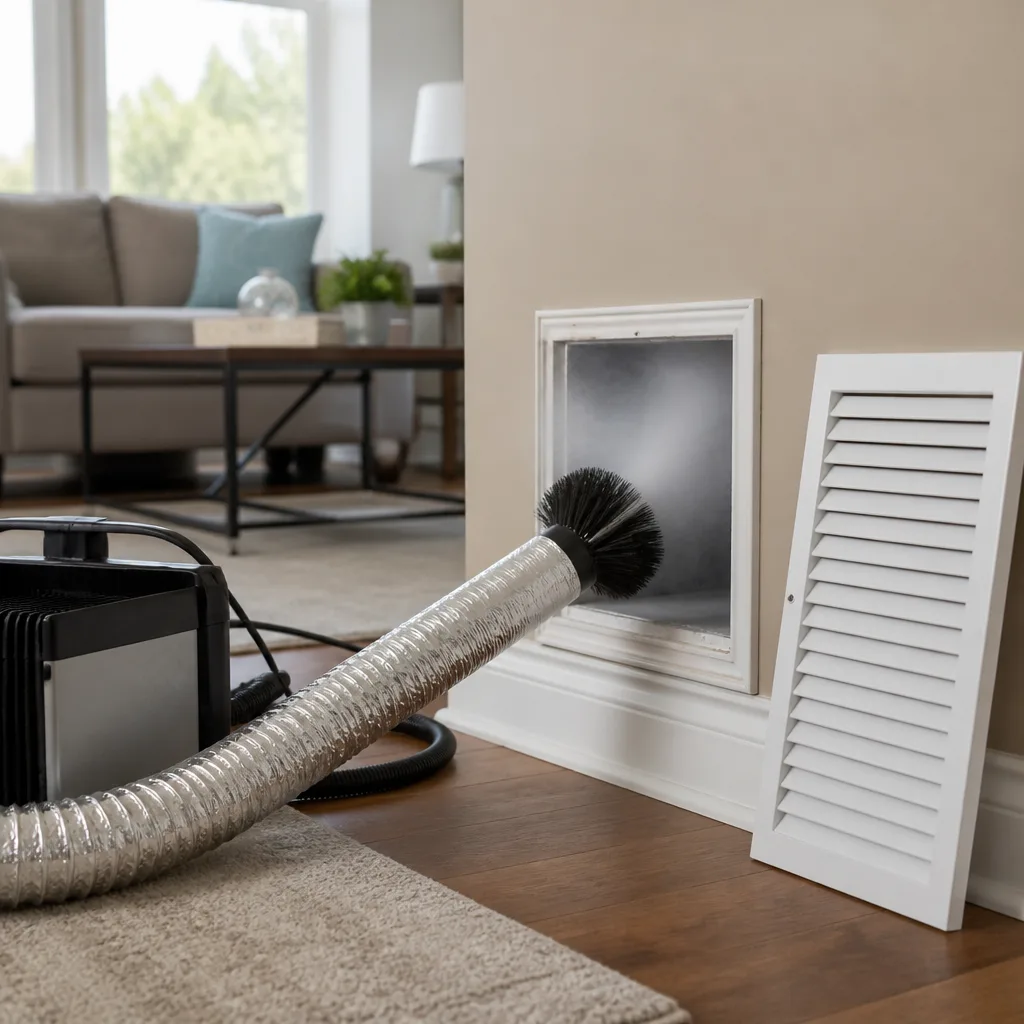 Sanitizing & deodorizing
Whole-system duct and dryer vent check with before-and-after photos - you see exactly what came out of your vents
That "$99 whole-house special" is a bait ad - the real number appears once they are in your hallway, or the "clean" is a shop-vac at the register. We photograph the inside of your ducts before and after instead.
How to Hire an Air Duct Cleaning Contractor in Longmont: A Step-by-Step Guide
Most homeowners think the hardest part of hiring a duct cleaner is finding one. It isn’t. The hard part is knowing whether the person who shows up can actually pull debris out of your system instead of just stirring it around. NADCA certification gets treated like a finish line, but it’s really the starting block. A certified technician can still arrive with a shop-vac-sized unit that can’t generate the negative pressure to move anything out of a 2,400 square foot duct system. This guide walks you through the equipment questions, the paperwork, the scope of work, and the red flags that separate a real cleaning from a costly lesson. Everything below is written for Longmont homes and Longmont duct systems.
Quick Answer
To hire a duct cleaning contractor in Longmont, verify three things before anyone touches your ductwork: the equipment (ask what vacuum unit they use and what it pulls in CFM), the credentials (HVAC licensing and liability insurance covering ductwork, not just general contracting), and the written scope (which runs, which components, how debris is contained). Then watch for flat-rate-per-vent pricing, which is the industry’s most common bait-and-switch signal. A legitimate contractor gives you a written flat price per system after assessing the system, not a per-vent number that climbs once the truck is parked.
Styles & brands we work with
- Whole-home duct cleaning
- Dryer vent cleaning
- Camera inspection
- Sanitizing & deodorizing
Table of Contents
- What equipment should a duct cleaning contractor use?
- Why do licensing and insurance matter for ductwork?
- How do you put the job scope in writing?
- How should a contractor handle incidental findings?
- What separates a legitimate estimate from a bait-and-switch quote?
- How does the Longmont climate shape what your ducts collect?
- How do you verify the work was actually done?
- How often should ducts be cleaned in Longmont?
What equipment should a duct cleaning contractor use?
Ask for the model and the CFM rating of the vacuum. A professional-grade negative-pressure vacuum pulls enough air to capture dislodged debris at the source; a consumer unit mostly pushes dust into the room. Truck-mounted units typically run higher CFM, but well-matched portable HEPA systems are common and legitimate for residential work. What matters is that the unit is HEPA-filtered and that the contractor can tell you its rated airflow without hesitating. If the answer is vague, that’s your answer.
Agitation matters just as much as suction. Contact-and-capture cleaning means physically dislodging debris so the vacuum can extract it. Ask what they use on rigid duct versus flex duct, because the two require different tools. A rotating brush system such as a Rotobrush is standard for rigid galvanized runs. Flex duct needs gentler handling; aggressive brushing can tear the inner liner, which then becomes a source of insulation fibers in your airstream.
- Rigid metal duct: rotating brush agitation plus vacuum extraction, with hoses sized to the run.
- Flex duct: low-agitation tools, sometimes compressed air whips or soft brushes, to avoid liner damage.
- Plenum and trunk lines: hand access and targeted brush work, not just mainline suction.
- Filtration during work: HEPA negative air machines or Abatement Technologies-style filtration equipment to keep dust out of the living space while the work happens.
At Duct Cleaning Longmont, we run Rotobrush brush-agitation systems paired with Nikro HEPA-vacuum extraction on every applicable job. We also carry Abatement Technologies air-filtration equipment for contamination scenarios beyond routine dust. When you’re ready to arrange a visit, start with duct cleaning Longmont and ask the equipment question before anything else. Our technicians have up to 10 years of experience and can explain the tooling on the phone.
Why do licensing and insurance matter for ductwork?
Ductwork isn’t plumbing or electrical, but it lives inside a mechanical system, and in Colorado the trade boundaries matter. A general handyman policy may not cover damage to HVAC components, and a contractor without proper liability coverage leaves you exposed if something gets punctured, crushed, or pulled loose. Ask for a certificate of insurance naming liability coverage, and ask specifically whether the policy covers HVAC and ductwork, not just general labor. Colorado requires HVAC work to be done by licensed mechanical contractors in many jurisdictions, so ask whether the contractor carries that licensing or holds the appropriate certification for the work being performed.
Licensing and insurance are not the same thing. A license tells you the contractor is permitted to work in the trade; insurance tells you there’s a financial backstop if something goes wrong. Get both confirmed. Ask for the insurance certificate directly from the insurer, not a scanned copy the contractor provides, since that’s an easy thing to fabricate.
NADCA certification is worth checking, but understand what it means. It shows the contractor has passed an industry exam and follows a source-removal standard. It doesn’t guarantee the equipment on the truck, the technician’s experience, or the written scope. Use it as one gate, not the whole gate. Pair it with the equipment questions above and with a clear scope discussion before any work begins.
How do you put the job scope in writing?
A written scope turns a vague promise into a checklist you can hold the contractor to. Before any work, the contractor should put in writing which duct runs will be cleaned, which components are included, where access panels will be installed, and how debris will be contained during the job.
- Identify the runs. List every supply and return branch that will be cleaned, plus the trunk lines and plenum. A whole-system cleaning shouldn’t just target the runs easiest to reach.
- State the components. Registers, grilles, supply boots, main trunk, return plenum, and the air handler cabinet are all part of a full system. If the contractor excludes any, ask why.
- Agree the access panel policy. Some systems need new access panels cut for proper cleaning. Get it in writing whether panels are included, where they’ll be placed, and how they’ll be sealed afterward.
- Define the containment method. A negative-pressure setup keeps dust from settling into your living room. Ask how they’ll contain debris and what filtration they’ll run during the work.
- Fix the price per system. One flat rate for the whole job, agreed before work begins. No per-vent figure that expands once the technician counts your registers.
This is where a general cleaning contractor and a duct specialist part ways. Specialists scope the whole system in one visit and handle connected problems – a disconnected joint, a crushed flex run – without sending you to a second contractor. We repair what we find on the same job. Contact-and-capture cleaning plus an honest written scope is what makes the visit worth the money.
How should a contractor handle incidental findings?
Ask upfront: when you find mold, pest evidence, or a disconnected joint inside the system, can you repair it or only document it? Contractors who can only document leave you scheduling a second visit with a different trade, and sometimes a second removal of the same debris. Contractors who repair on the spot close the loop in one appointment.
Common findings inside Longmont ductwork include:
- Mold or mildew growth at the plenum or in the air handler cabinet, often where condensation collects in summer.
- Rodent droppings or nesting material in return runs, particularly in older homes with unsealed crawl space penetrations.
- Disconnected or crushed flex duct behind walls or in attics, dropping air pressure across the whole system.
- Construction debris – drywall dust, sawdust, and framing scraps left inside runs after a renovation.
For contamination scenarios beyond routine dust, filtration equipment makes the difference between cleaning and clearance. We bring Abatement Technologies air-filtration equipment on every applicable job, the same category of gear used in professional remediation work. If mold or pest evidence turns up, we can clean and repair, and we can recommend filtration upgrades such as Honeywell or Aprilaire products where better air is the goal. We don’t perform mold remediation, chimney work, or HVAC installation; our scope is air duct cleaning, air duct repair, and dryer vent cleaning.
What separates a legitimate estimate from a bait-and-switch quote?
A legitimate estimate follows an inspection of the system – the number of runs, the type of duct, the condition, and the access requirements – and gives you one flat rate for the whole job. A bait-and-switch quote gives you a low per-vent price or a coupon number on the phone, then adds charges once the technician is inside the house: extra for the second story, extra for a dirty system, extra for access panels.
Per-vent pricing is a known red flag because it lets the contractor quote low before knowing your system, then recalculate the invoice once they see it. A 2,400 square foot Longmont home may have 15 registers or 25, and the price shouldn’t swing wildly between them for the same square footage. Flat pricing per system removes that game.
- Legitimate: Flat price per system, agreed in writing before work starts. Includes the runs, components, access panels, and containment.
- Legitimate: Before-and-after photos of your ductwork, taken during the job.
- Legitimate: Licensed and insured, with a certificate you can verify.
- Red flag: Per-vent pricing, teaser coupons, or a phone quote that changes on arrival.
- Red flag: No written scope, and pressure to sign before inspection.
- Red flag: A technician who can’t name the vacuum model or the agitation tools.
Our estimates are free, and we set one flat price per system before any work starts. We take before-and-after photos of your own ducts so you can see what changed. If you’re comparing quotations in Longmont, read air duct cleaning and use that page as a reference point for what a full-system scope should cover.
How does the Longmont climate shape what your ducts collect?
Longmont sits on the Front Range, where four distinct seasons keep both heating and cooling systems working hard. Cold winters mean long furnace runtimes, which move more dry air through the ducts. Dry air carries fine dust and particulate more readily than humid air, and forced-air heat pushes that dust through every register in the house. By spring, those same systems switch to cooling and the plenum starts to collect condensation where cool coils meet warm air – a common place for mildew if drainage isn’t clean.
Spring on the Front Range also brings the famous wind, and with it pollen and fine dust that finds its way into returns. Older Longmont neighborhoods with mature trees see higher pollen loads in the intake runs. If anyone in the household notices allergy flare-ups at home that ease when they leave, the return-side ductwork is a fair suspect.
Home construction matters too. Older homes in Longmont often have original galvanized ducting that has accumulated decades of dust, plus attics with unsealed penetrations that invite rodents. Newer construction sometimes carries construction debris and loose flex connections left by the original installer. Either way, the reason to clean isn’t cosmetic – it’s to remove accumulated material that the airstream keeps re-entraining into your rooms. Contractors who understand how Longmont housing stock and climate interact with ductwork will scope the job differently than someone running the same script in every city.
How do you verify the work was actually done?
Require before-and-after photos of your own ductwork, not stock images. A contractor with the right equipment and confidence takes photos of the return plenum and a sample of supply runs before and after cleaning, and shows them to you before you write a check. If the contractor dismisses the request, that’s information.
Watch the process while it happens. Contact-and-capture cleaning is visible work: brush agitation running through the runs, a HEPA vacuum hooked up, negative pressure maintained throughout. If nobody is agitating, and no large vacuum is connected, the debris isn’t going anywhere but around.
- Confirm the equipment is set up before the technician starts. The vacuum and brush head should be visible.
- Ask for the scope read aloud. Every run and component on the written list should be checked off as it’s cleaned.
- Review the before-and-after photos while the technician is still on site.
- Ask what was found. A good contractor can tell you about disconnected joints, pest evidence, or damaged flex. That’s the value a per-vent discounted job rarely delivers.
- Get the invoice matching the estimate. If the flat price per system changed, ask why, in writing, before paying.
If you’re planning a duct cleaning in Longmont, this inspection checklist is the difference between a real cleaning and a billed visit. Our technicians have up to 10 years of experience and walk through findings with you directly.
How often should ducts be cleaned in Longmont?
For most Longmont households, a cleaning every three to five years is a reasonable baseline, adjusted for pets, allergies, recent renovations, or a move into a home with unknown service history. Homes with multiple pets, or with anyone in the house who has asthma or seasonal allergies, tend to need it closer to the three-year mark. Homes with recent renovation work should have the ducts cleaned once the drywall dust settles, since construction debris is a different cleaning problem than ordinary household dust.
Signs you shouldn’t wait:
- Musty or stale odors when the system starts running.
- Uneven airflow between rooms, or rooms that never seem to heat or cool properly.
- Visible dust plumes at the registers when the system kicks on.
- Allergy symptoms that worsen at home.
- A new-to-you home with no service records.
Dryer vents are a separate schedule problem. Lint accumulation in a dryer vent is a fire hazard and a performance drag, and it should be checked annually, more often in high-use households. We handle dryer vent cleaning as one of our three core services, which keeps the whole ventilation picture in one place. For homes with humidity issues, filtration upgrades such as Guardsman or Aprilaire products can extend the time between cleanings by cutting the particulate that reaches the ducts in the first place.
Common Mistakes to Avoid
- Hiring on price alone. The cheapest quote is often the one that adds charges on arrival. Ask for a flat price per system in writing and compare the scope, not the number.
- Skipping the equipment question. A contractor who can’t tell you the vacuum CFM or the agitation tools isn’t running contractor-grade equipment. That’s not a cleaning; it’s an air shuffle.
- Accepting a per-vent quote. Per-vent pricing lets the invoice recalculate once the technician is inside. Insist on a system-based flat rate.
- Not asking about repairs. If the contractor can only document a disconnected joint or mold evidence, you’ll be hiring a second trade for the same problem. Ask upfront whether they repair what they find.
- Accepting stock photos as proof. Before-and-after images must be of your ducts. Stock photos aren’t verification.
- Ignoring the dryer vent. Longmont homes with high-use dryers need annual vent checks. Lint buildup isn’t cosmetic; it’s a fire risk.
- Forgetting to verify insurance. A certificate from the insurer, covering HVAC and ductwork, is the backstop if something is damaged during the job.
See the difference
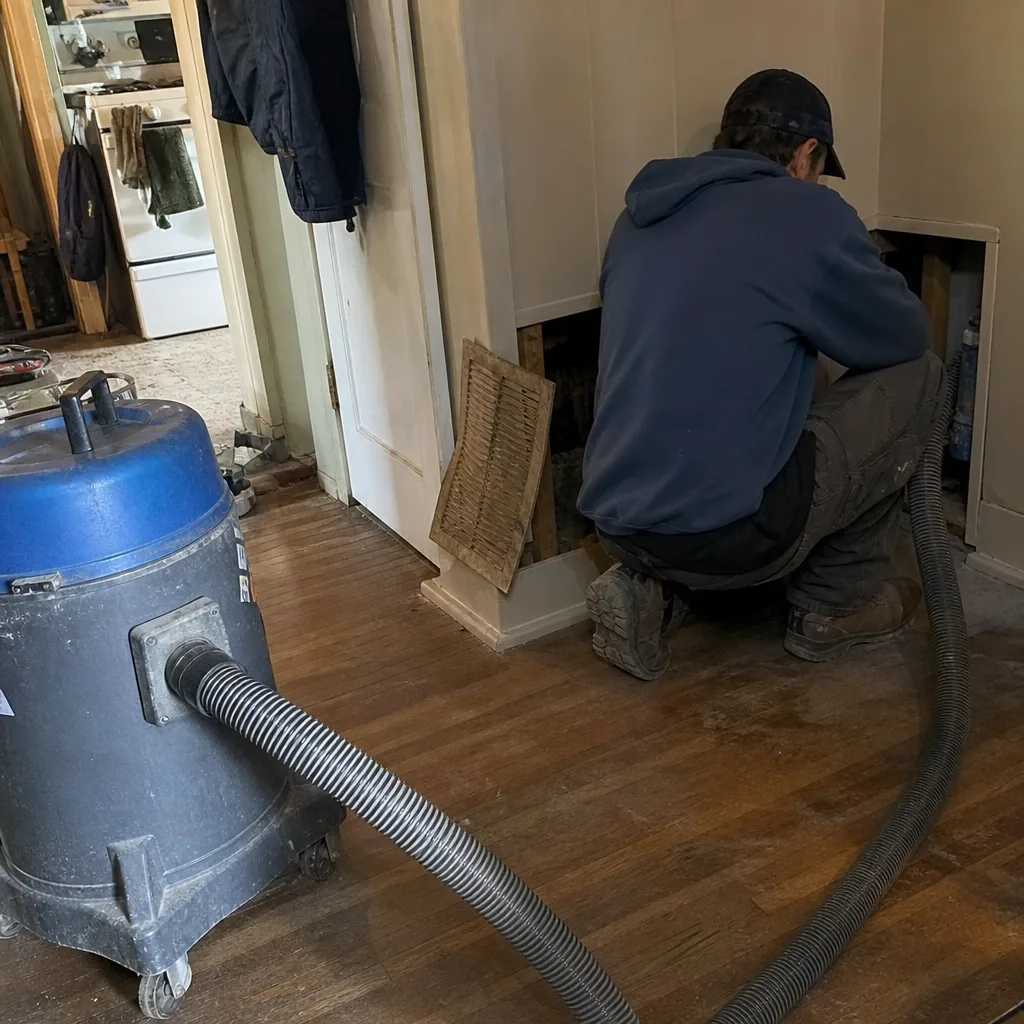 Before
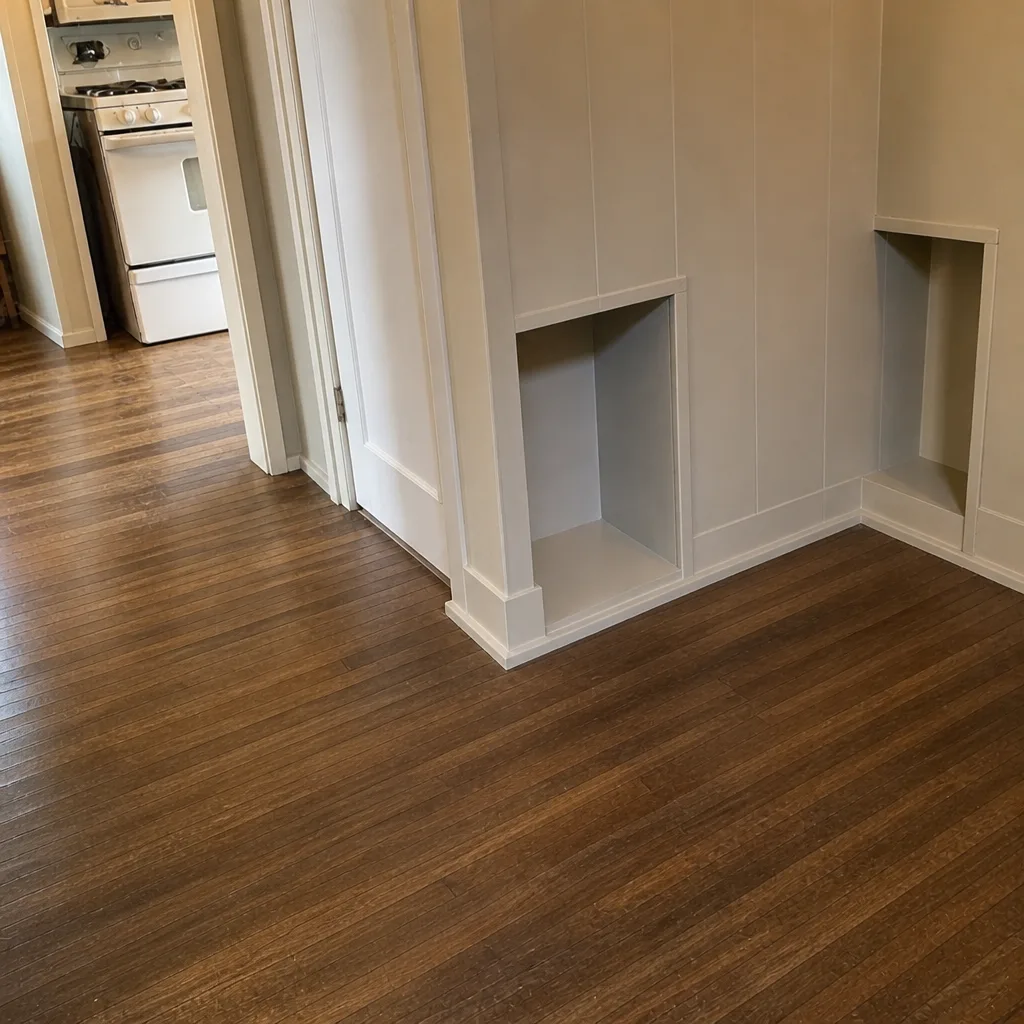 After
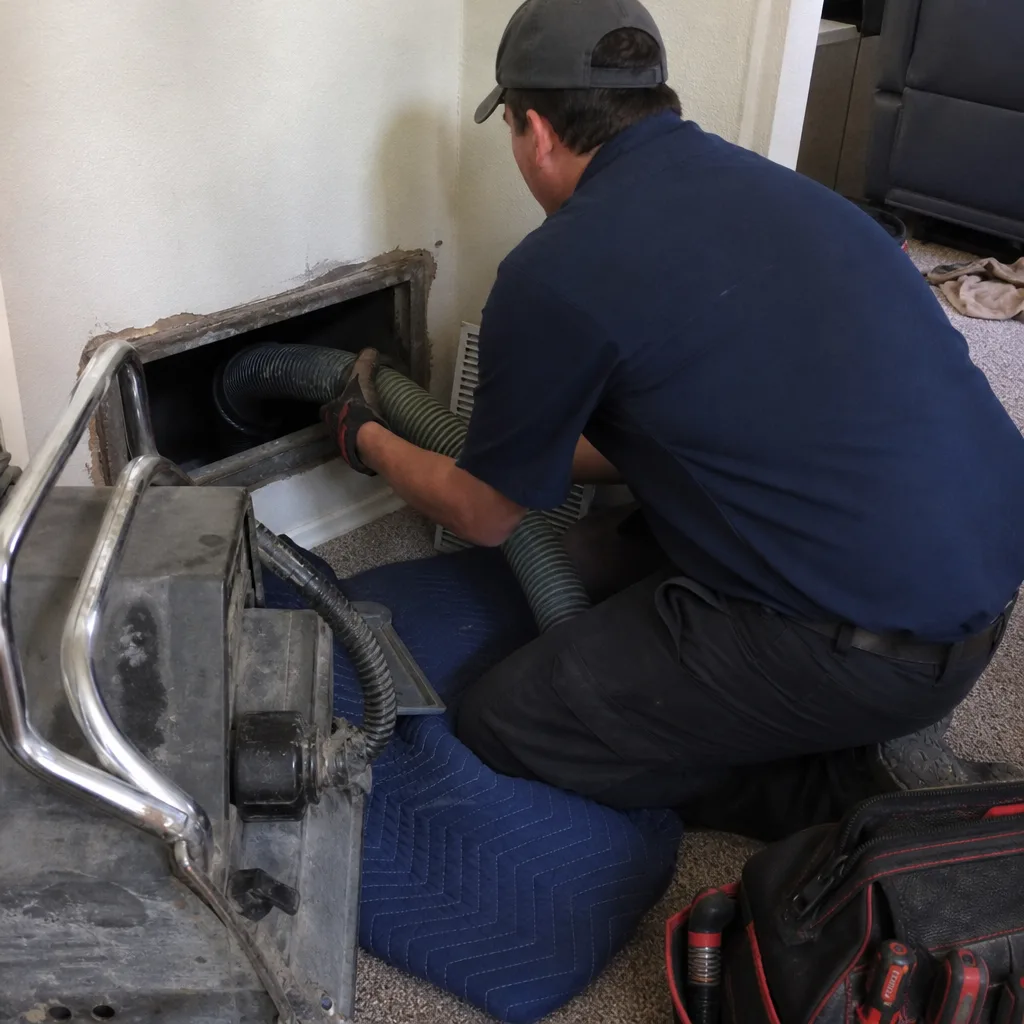 Before
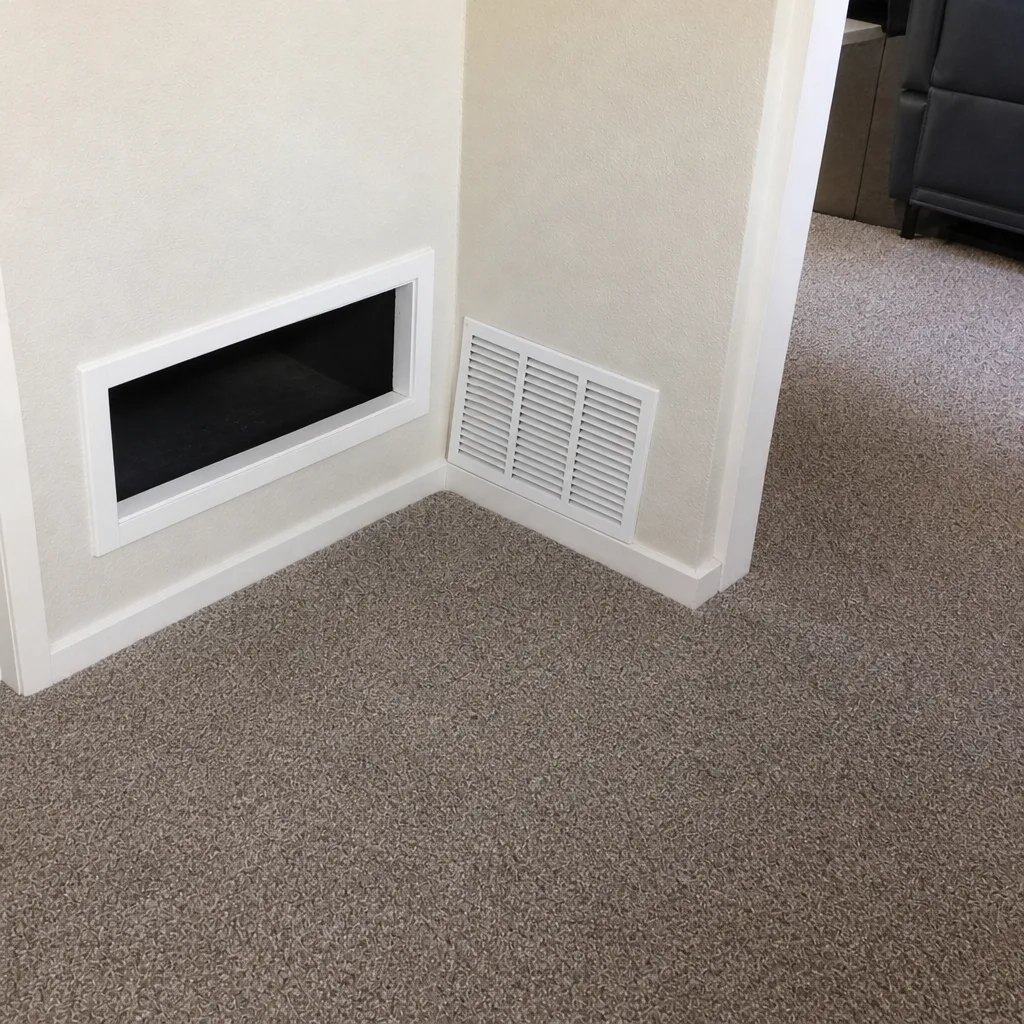 After
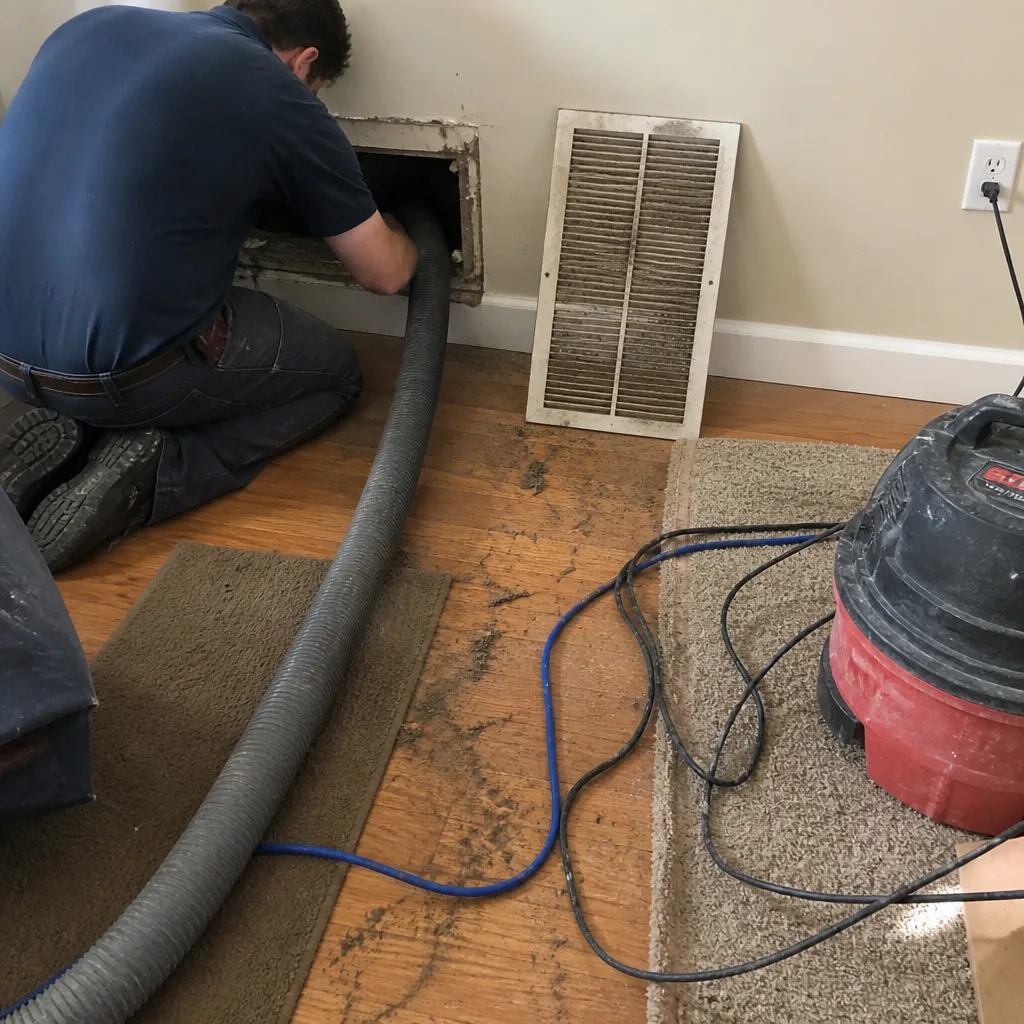 Before
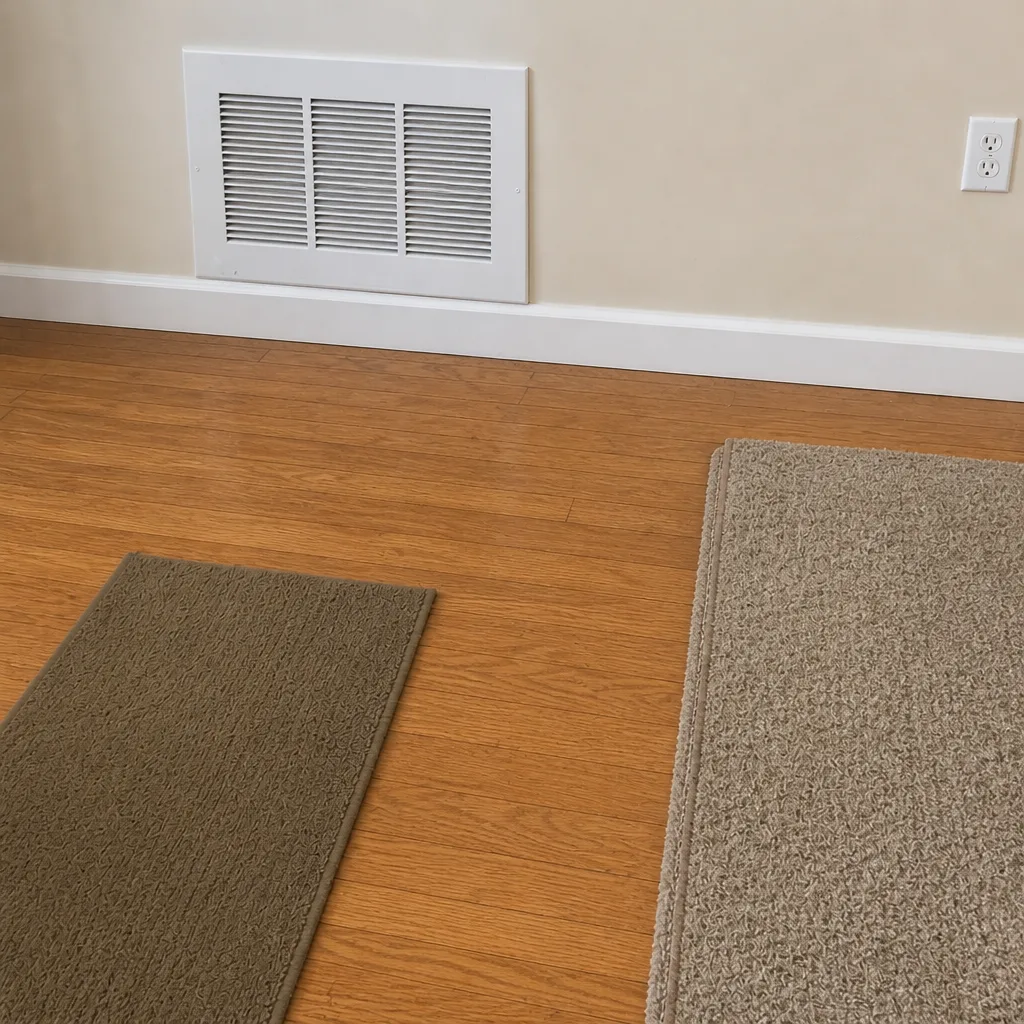 After
When to Call a Professional
Call a professional if you can smell the system when it runs, if airflow is uneven between rooms, if you’ve just finished a renovation, if the house is new to you and the service history is unknown, or if anyone in the household has allergy symptoms that ease away from home. Those are the situations where an inspection and a proper cleaning actually pay off. What you shouldn’t do is rent a consumer vacuum and attempt the ductwork yourself; without negative pressure and proper agitation, you’ll dislodge debris without capturing it, and flex duct is easy to damage with improvised tools. Duct Cleaning Longmont offers free estimates in Longmont – call (866) 361-9658. We answer 24/7. Fast dispatch from 7am to 7pm, Sunday through Friday.
Frequently Asked Questions
Pricing runs as a flat rate per system, set by a written estimate after inspection, so the number depends on the number of runs, the duct type, and the condition. We don’t quote per vent and we don’t offer teaser coupons. Call (866) 361-9658 for a free estimate. We answer 24/7. Fast dispatch from 7am to 7pm, Sunday through Friday.
Low quotes usually start from a per-vent teaser price that expands once the technician is inside, often with charges for access panels, second stories, or system condition. A flat price per system agreed before work starts is the honest structure. Call (866) 361-9658 for an exact quote – estimates are free.
Ask for before-and-after photos of your own ductwork, and watch the setup: brush agitation running, HEPA vacuum connected, negative pressure maintained. If the contractor can’t show you the process and the photos, you have your answer. Call (866) 361-9658 to schedule a visit with a team that documents the work.
Every three to five years is a fair baseline for most homes, moving to every three years with pets, allergies, or recent renovations. Dryer vents should be checked annually. Call (866) 361-9658 to talk through your home and get a free estimate.
Yes. Air duct repair is one of our three core services, so a disconnected joint, crushed flex run, or damaged register boot gets fixed on the same visit rather than referred to a second contractor. Call (866) 361-9658 for a free estimate.
We clean and repair ductwork and we carry Abatement Technologies air-filtration equipment for contamination scenarios, but we do not perform mold remediation itself. If mold is found, we clean what falls within our scope and tell you plainly what needs a remediation specialist. Call (866) 361-9658 to discuss your situation.
The Bottom Line
Hiring a duct cleaning contractor in Longmont comes down to three verifications: equipment, credentials, and written scope. Ask for the vacuum CFM and agitation tools, confirm licensing and liability insurance covering HVAC work, and insist on a flat price per system agreed before the technician starts. Watch for per-vent pricing and teaser coupons, which are the industry’s most reliable bait-and-switch signals. Ask whether the contractor can repair what they find, and require before-and-after photos of your own ducts. Do those things and you’ll get a cleaning that removes debris rather than redistributing it. Skip them, and you’re paying for a visit, not a result.
If you want a free estimate for Longmont homes, call Duct Cleaning Longmont at (866) 361-9658. We answer 24/7. Fast dispatch from 7am to 7pm, Sunday through Friday. One flat price per system, licensed and insured, and before-and-after photos of your own ductwork.
Written by the team at Duct Cleaning Longmont.