
Last updated November 15, 2026
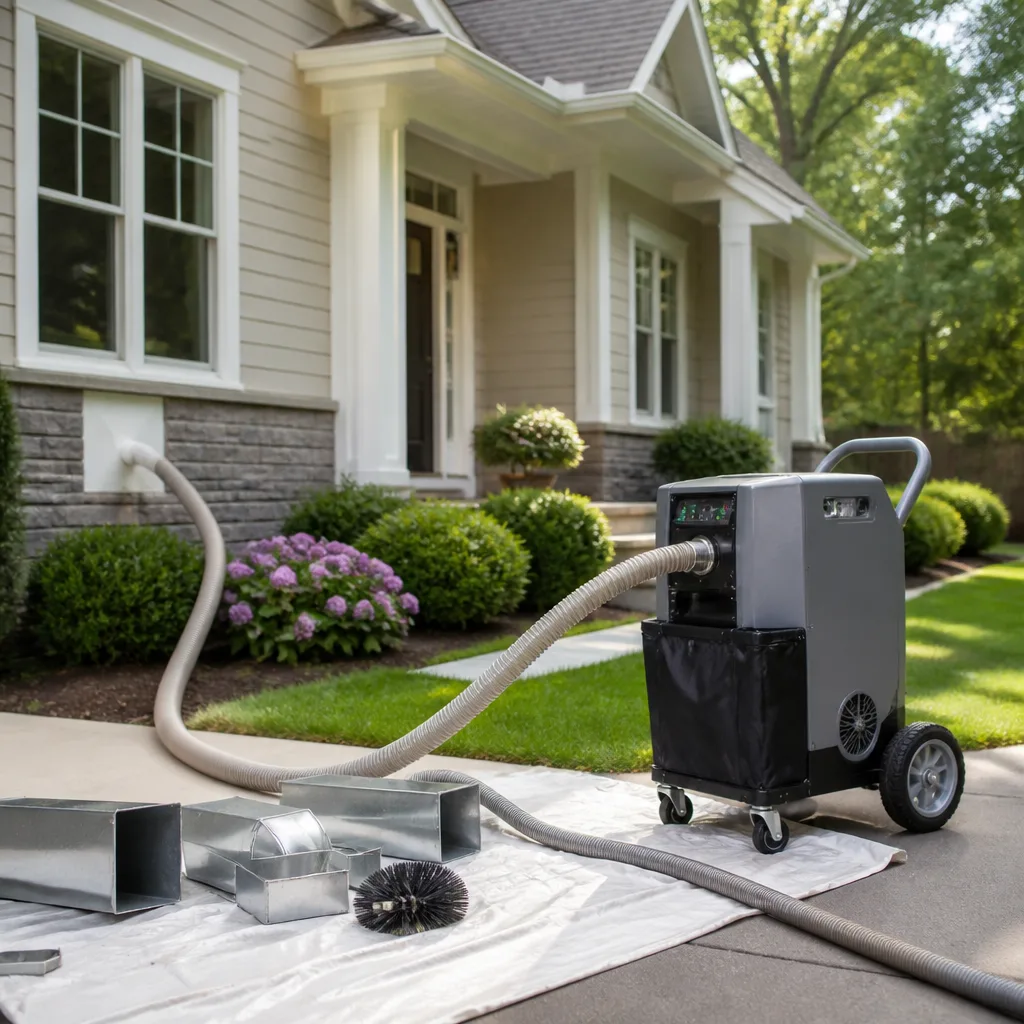 Whole-home duct cleaning
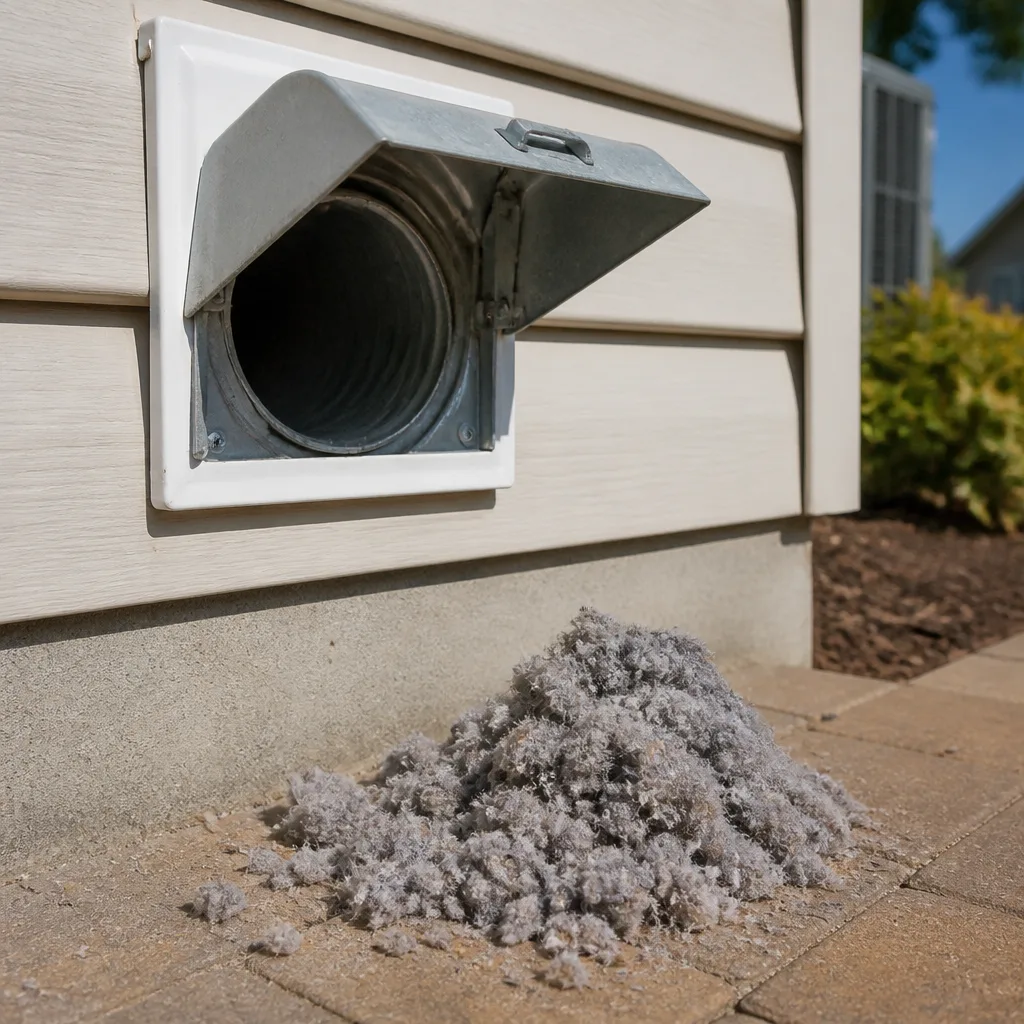 Dryer vent cleaning
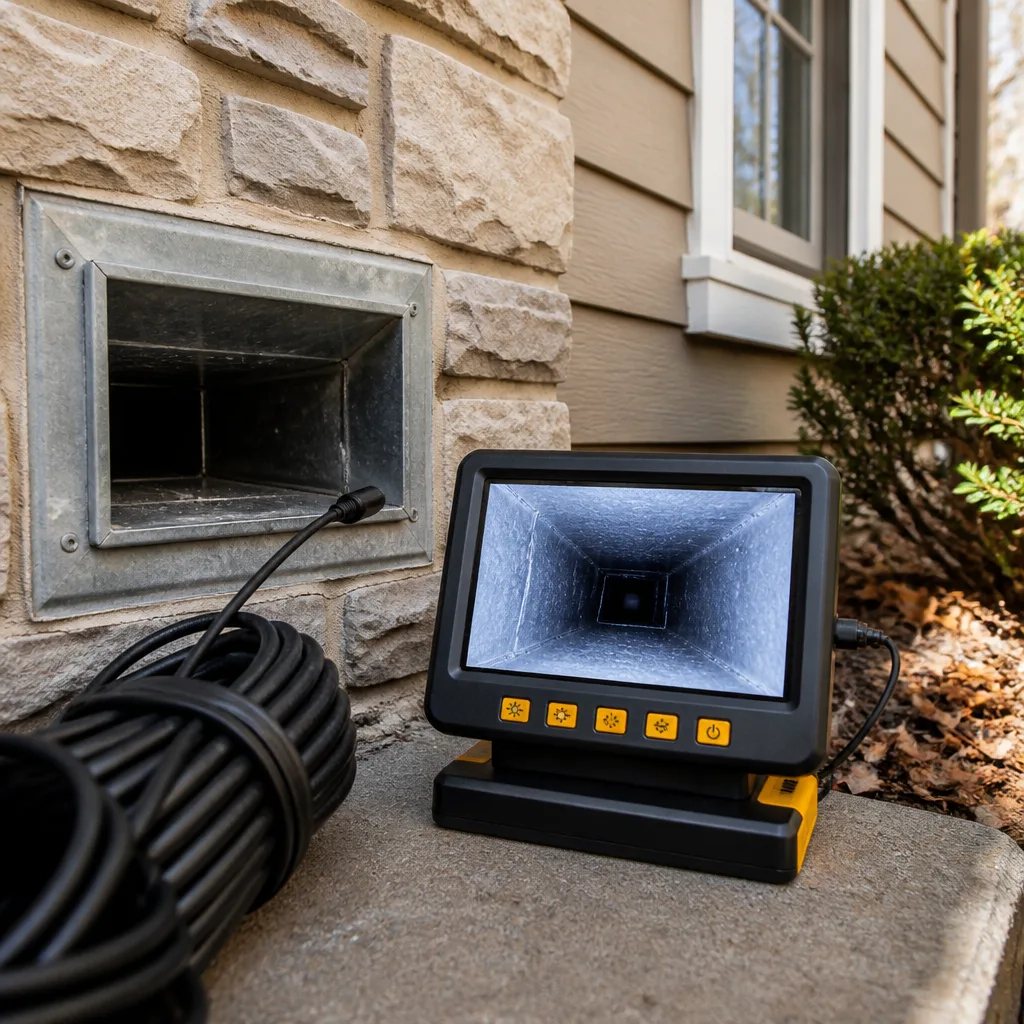 Camera inspection
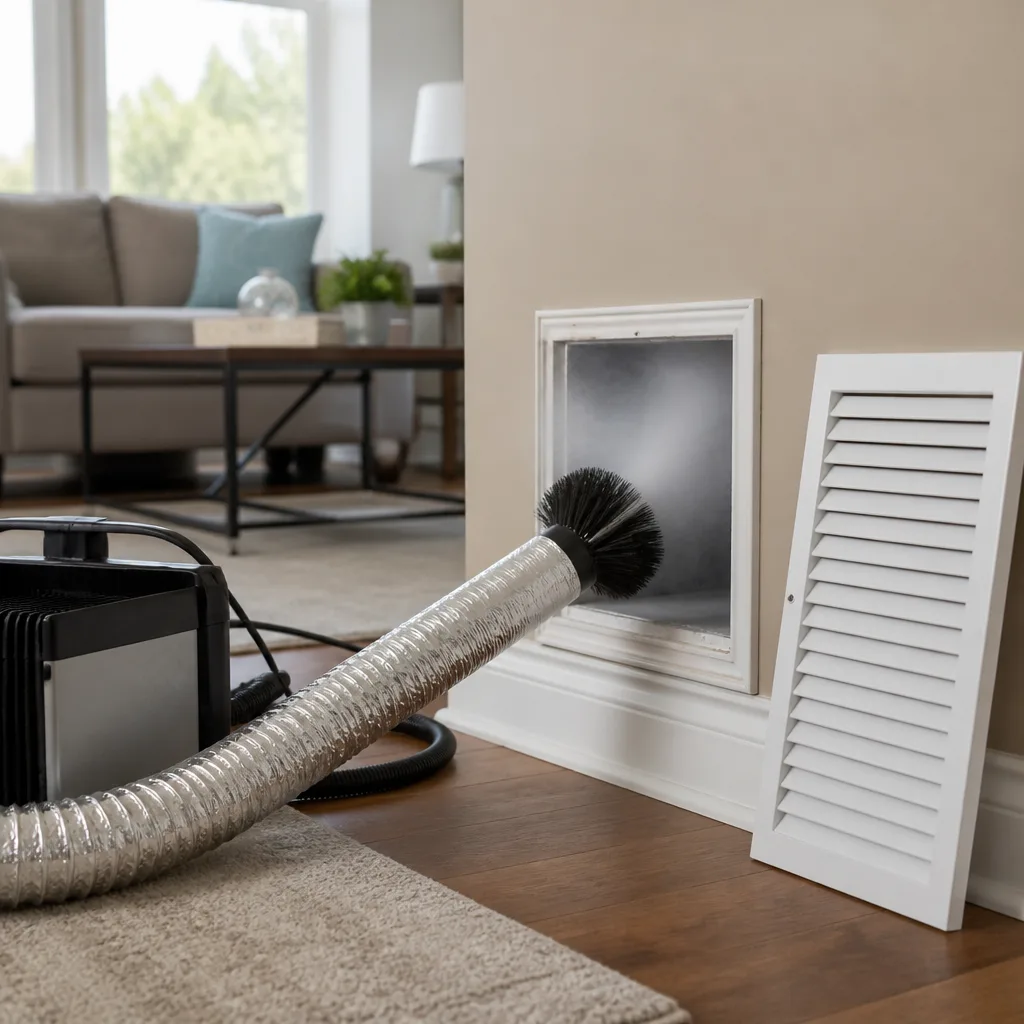 Sanitizing & deodorizing
Whole-system duct and dryer vent check with before-and-after photos - you see exactly what came out of your vents
That "$99 whole-house special" is a bait ad - the real number appears once they are in your hallway, or the "clean" is a shop-vac at the register. We photograph the inside of your ducts before and after instead.
Air Duct Cleaning Maintenance Schedule: What to Do and When
The “every three to five years” rule you’ve seen repeated everywhere was never a universal prescription. It’s a baseline figure for a tightly sealed, pet-free, non-smoking home with newer ductwork and a well-fitted filter. Change any one of those variables and the interval moves. Add a shedding dog, a kitchen remodel, or a summer of wildfire smoke drifting over the Front Range and the honest answer becomes “sooner, and here’s how you’ll know.” This guide replaces the calendar-date guess with a trigger-based schedule you can actually apply to your own house in Longmont. You’ll learn which conditions shorten the interval, what maintenance you can handle yourself between professional cleanings, and how to read your own system’s signals before you book anything.
Quick Answer
Most homes need professional duct cleaning every three to five years, but homes with pets, recent renovations, or exposure to wildfire smoke seasons often need it every 18 to 24 months. Between cleanings, change your filter on schedule, vacuum return grilles, and check your dryer vent. If you can see visible debris, notice musty odors, or airflow has dropped, clean now regardless of the calendar.
Styles & brands we work with
- Whole-home duct cleaning
- Dryer vent cleaning
- Camera inspection
- Sanitizing & deodorizing
Table of Contents
- Why the 3-to-5 Year Rule Is a Baseline, Not a Law
- The Triggers That Shorten Your Interval
- How Wildfire Smoke Seasons Load Your Ducts
- Winter Heating, Humidifiers, and Debris Accumulation
- What You Can Do Yourself Between Cleanings
- The One-Page Decision Chart
- The Dryer Vent Schedule That Runs on Its Own Clock
- When Cleaning Reveals a Repair Problem
Why the 3-to-5 Year Rule Is a Baseline, Not a Law
The three-to-five-year figure circulates because it’s a reasonable midpoint for a typical household. It assumes a sealed duct system, no indoor pets, no smokers, and ductwork installed in the recent past. Under those conditions, dust accumulation inside the ducts is slow and predictable. Under different conditions, it isn’t.
A single long-haired dog can double the particulate load reaching your return grilles. A house that sat through two summers of smoke advisories collects fine ash particles that behave differently than household dust, clinging to duct walls and settling into the joints. Older fiberglass-lined ductwork degrades over time, and the liner itself can begin shedding fibers into the airstream. None of those situations follow a five-year clock.
In our experience working on Longmont homes, the practical interval is set by what’s entering the system and how well the filter is catching it, not by the year stamped on the last service invoice. That’s the shift this guide asks you to make: from a fixed schedule to a set of conditions you can watch.
The second reason the baseline misses is that “clean” means different things depending on how the work gets done. A vacuum-only pass can pull loose dust from a trunk line without touching what’s bonded to the walls. Contact-and-capture cleaning, where brush agitation physically dislodges debris and HEPA extraction pulls it out of the system, removes more on each visit. That changes the math on how long the result lasts. When you’re comparing quotes, ask which method the contractor uses before you compare the interval they recommend.
The Triggers That Shorten Your Interval
Instead of asking “has it been five years,” ask whether any of the following conditions apply to your home. Each one shortens the effective interval. Two or more stacked together put you in the 18-to-24-month bracket.
Household and Occupant Triggers
- Pets indoors: One or more animals that shed regularly is the single most common reason we see ducts loaded well before the five-year mark. Pet dander and hair ride the return air and settle in the duct runs, especially the long branches serving bedrooms.
- Smoking indoors: Residue coats duct surfaces and holds other particles in place.
- Allergy or asthma sufferers in the household: The margin for accumulated particulate is smaller. Some homeowners choose cleaning on a shorter cycle simply to lower the load in circulation.
- Young children or a home daycare: More foot traffic, more tracked-in dust, more hours of occupancy.
Environmental and Construction Triggers
- Renovation dust: Drywall sanding, flooring removal, and painting put fine particulate into the air that the HVAC system pulls straight into the returns. Seal returns during the work if you can, and plan a cleaning after the project wraps.
- Wildfire smoke seasons: Detailed below, but this one is significant on the Front Range.
- Filter grade below MERV 8: A low-grade filter lets more through. You can compensate with more frequent filter changes and a shorter cleaning interval.
- Duct material: Rigid metal ducts hold up well. Flexible and fiberglass-lined ducts trap more and are harder to clean completely, which shortens the useful interval.
If you’re not sure which category your home falls into, that’s exactly the point where a professional inspection is cheaper than a guess. A camera inspection can tell you what’s actually in the system before you commit to a full cleaning.
How Wildfire Smoke Seasons Load Your Ducts
Longmont sits where smoke from mountain and foothill fires drifts down onto the plains during summer and early fall. On Red Flag Warning days and during air quality advisories, fine particulate fills the outdoor air. Run your HVAC system with windows closed, and some of that particulate enters through the return, passes the filter, and settles in the ductwork over weeks of accumulation.
That load behaves differently from ordinary household dust. Smoke particulate is fine and adhesive, and it collects in layers that a single filter season won’t capture. A home that ran its system through a heavy smoke summer starts the following heating season with more debris in the ducts than a comparable home that saw clean air all season.
How to account for it:
- Upgrade your filter during smoke season. A higher-MERV filter captures more fine particulate. Confirm your system can handle the added resistance, or talk to whoever services your HVAC equipment.
- Keep windows and doors closed on advisory days. Recirculating with a good filter is the better option.
- Change the filter more often during and after smoke events. A loaded filter stops doing its job and can restrict airflow.
- Move the cleaning interval up a notch after a severe smoke season. If you’d normally wait five years, waiting three (or two, in a pet household) reflects the added load.
If you’ve weathered a rough smoke season and the system has been running hard, that’s a sensible moment to schedule an inspection. See what a professional air duct cleaning involves before you decide between waiting and cleaning now.
Winter Heating, Humidifiers, and Debris Accumulation
Dry winter air is a fact of life along the Front Range, and many Longmont homes run a whole-home humidifier to counter it. If you’ve had an Aprilaire or similar unit installed, it changes the picture inside your ducts in ways that aren’t obvious.
Humidified air means higher moisture content moving through the system. Dust particles that would otherwise stay loose and dry can clump together, and that clumping makes them settle faster on duct walls, at joints, and around registers. More moisture also means a film can form on duct surfaces, which holds subsequent dust more readily than a dry surface would. The result is a system that accumulates debris faster than a dry-air home of the same size and occupancy.
There’s a second consideration. Humidifier pads and water panels need regular replacement, and a pad that’s been left in service too long can become a source of mineral buildup and odor that then travels through the ductwork. Check the pad on the manufacturer’s recommended schedule, and if you notice a musty smell when the heat comes on, the humidifier is one place to look before assuming the ducts themselves are the problem.
This is also where a filtration upgrade pairs naturally with cleaning. We supply and install Honeywell and Aprilaire filtration and indoor air quality products, which lets you move from a clean duct system to a better-filtered one as part of the same visit rather than as a separate project down the road. If your ducts are clean but your filter grade is low, the cleaning will need repeating sooner than it should.
What You Can Do Yourself Between Cleanings
You don’t need a professional to handle everything. Three tasks, done consistently, meaningfully extend the interval between cleanings and give you the information to know when a pro visit is warranted. None of them require tools beyond a screwdriver and a vacuum.
1. Filter Changes (10 minutes, every 30 to 90 days)
Your filter is the first line of defense. Choose a MERV rating suited to your system’s capacity. MERV 8 is a reasonable middle ground for most homes, capturing a solid range of particulate without over-restricting airflow. Homes with allergy sufferers or in smoke season may go higher, provided the system can handle it. Cheap fiberglass filters catch almost nothing of consequence. Change the filter on a schedule that matches the season: more often during smoke events and heavy heating cycles, less often in mild months. Write the change date on the filter frame edge so you don’t have to remember.
2. Return Grille Vacuuming (15 minutes, every couple of months)
The return grilles and the short duct run directly behind them collect the visible layer of dust, hair, and pet fur. Remove the grille with a screwdriver, vacuum the grille face, and run a vacuum hose as far into the return as it reaches. This doesn’t clean the full system, but it reduces what makes it into the deeper runs. It’s also your best visual check: if the dust behind the grille is thick and dark, the rest of the system is likely carrying more than the surface shows.
3. Dryer Vent Checks (10 minutes, monthly)
This one is separate from your air ducts and runs on its own schedule. Check the vent behind the dryer for kinks, make sure the exterior flap opens freely, and confirm lint isn’t packing the visible portion of the run. Beyond the monthly check, a professional dryer vent cleaning removes the lint that accumulates deep in the run, where a homeowner can’t reach it. Lint accumulation is the leading cause of dryer vent fires, so this is a safety task, not a cosmetic one.
Keep a simple log. When you changed the filter, when you last ran the vacuum, when you had the dryer vent cleaned. A log turns “I think it’s been a while” into a real decision.
The One-Page Decision Chart
This is where everything in the guide comes together. Answer the four questions below and the chart points you toward one of three actions: clean now, wait, or inspect first.
Question 1: How old is the duct system?
- Under 10 years: Newer systems accumulate more slowly. Favor “wait” unless other triggers apply.
- 10 to 25 years: Average accumulation. Standard interval applies.
- Over 25 years: Check for fiberglass liner degradation and gaps at joints. Favor “inspect first.”
Question 2: What’s the duct material?
- Rigid metal, sealed at joints: Holds up well. Standard interval.
- Flexible duct: More surface area and more places for debris to settle. Favor the shorter interval.
- Fiberglass-lined: The liner can degrade and shed fibers. Favor “inspect first,” and clean on a shorter cycle.
Question 3: What’s the occupant profile?
- Pets, smokers, allergy sufferers, or high occupancy: Clean every 18 to 24 months.
- No pets, no smokers, average occupancy: Clean every 3 to 5 years.
Question 4: When was the last cleaning, and what’s happened since?
- Recent cleaning, no major events: Wait.
- Recent cleaning but a renovation or severe smoke season since: Inspect first.
- Over five years, or unknown: Clean now.
The decision rule: If any one answer points to “clean now,” clean now. If two or more point to “inspect first,” book a camera inspection. If everything points to “wait,” wait and check again in six months. This is the schedule that actually fits a real Longmont home, rather than a calendar date copied from a generic checklist.
The Dryer Vent Schedule That Runs on Its Own Clock
The dryer vent is part of your air system but operates on a separate maintenance timeline, and it’s the one that carries a genuine fire risk. Lint is highly flammable, and a vent that’s packed with it traps heat in the dryer. This is a safety topic, not a housekeeping preference.
The schedule that works:
- Monthly: Check the vent connection behind the dryer for kinks or crushing, and clear any lint from the immediate area. Confirm the exterior flap opens and closes freely.
- Every 6 to 12 months, depending on household: Schedule a professional dryer vent cleaning. Households that run the dryer heavily, or have pets whose hair gets into the laundry, should sit at the six-month end.
- Any time drying times increase noticeably: This is a signal, and it usually means the vent is restricted. Treat it as a prompt to inspect and clean before assuming the dryer itself is failing.
- Any time you notice a burning smell or excess heat: Stop using the dryer and have the vent checked before running it again.
Because air duct cleaning and dryer vent cleaning are separate jobs with separate schedules, homeowners often let one lapse while keeping up with the other. Bundling them into a single visit is one way to keep both on track. Our team handles both, along with air duct repair, so connected problems get diagnosed and resolved by the same people rather than bounced between contractors.
When Cleaning Reveals a Repair Problem
Sometimes the reason a system needs cleaning sooner than expected isn’t dust at all. It’s a physical problem the debris is a symptom of. A return that’s drawing air from an unconditioned crawlspace, a disconnected duct run in the attic, a crushed flexible section behind a knee wall, or a gap where two trunk sections meet: all of these pull unfiltered air and dust into the system, and all of them mean the ducts will be dirty again soon after cleaning unless the underlying issue is fixed.
This is the difference between a cleaner and a contractor. A vacuum-and-go service removes the debris and leaves the cause in place. A contractor-grade operation uses contact-and-capture cleaning with Rotobrush brush agitation and Nikro HEPA extraction to physically dislodge and remove what’s in the system, then checks whether a repair is what’s putting it there. We repair what we find, which is why the cleaning visit is also a diagnostic one.
Some jobs go beyond routine cleaning. If a renovation left fine drywall dust throughout the system, or if there’s a contamination concern that needs more than a standard pass, we bring in Abatement Technologies air-filtration equipment to handle the load. That’s the same category of gear used in professional remediation work, and it’s what separates a job that needs containment from one that doesn’t.
If you’ve had a service that cleaned the ducts but the problem came back within a year, a hidden leak or disconnected run is the first thing to check. Repairing the system is the only thing that makes the cleaning stick.
Common Mistakes to Avoid
- Treating the 3-to-5-year figure as a rule. It’s a baseline for one type of household. A Longmont home with two dogs and a recent remodel is a different situation, and the interval should reflect that. Apply the triggers, not the calendar.
- Buying the cheapest filter and never upgrading. A low-MERV fiberglass filter passes most fine particulate straight through to the ducts. The filter is doing the work of keeping your ducts clean between services, and a cheap one makes that interval shorter.
- Skipping the vacuum on return grilles. The grille is the visible face of the whole system. Vacuuming it takes fifteen minutes, reduces what enters the deeper runs, and gives you the visual read on how the system is loading.
- Ignoring the dryer vent because the dryer still works. Lint accumulation is a fire risk, and a restricted vent often shows up first as longer drying times long before it becomes a safety event. Check it monthly, clean it professionally on schedule.
- Assuming a humidifier is unrelated to duct debris. Whole-home humidifiers add moisture to the airstream, which makes dust clump and settle faster. Homes with Aprilaire or similar units should factor that into the interval and check the pads on schedule.
- Scheduling a cleaning before a renovation or immediately cleaning after one. Seal the returns before the work starts where possible. A cleaning done mid-project gets undone as the work continues. Plan it for after the dust settles.
- Getting a cleaning when the real problem is a disconnected duct. If the system is pulling from a crawlspace or a run has come loose, the ducts will be dirty again within a year. Ask whether the service includes an inspection for leaks and disconnected runs.
See the difference
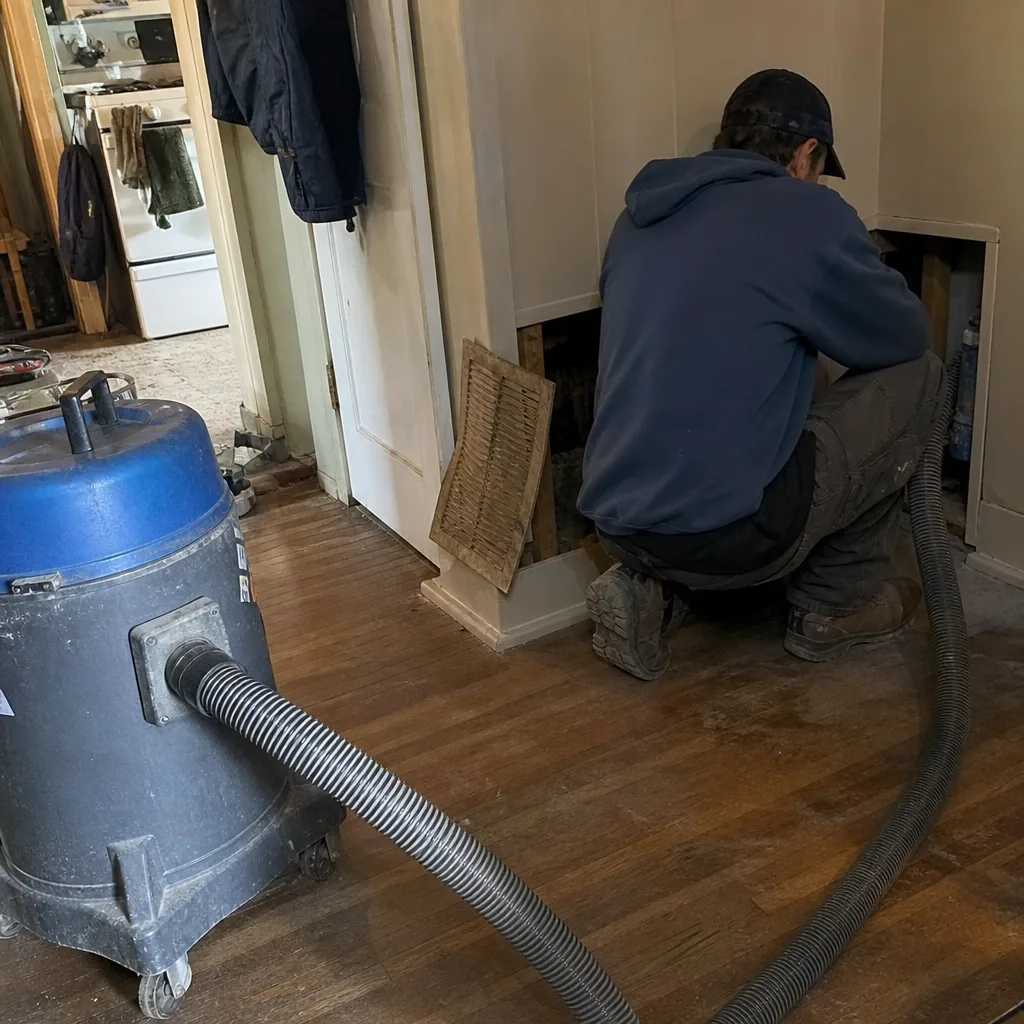 Before
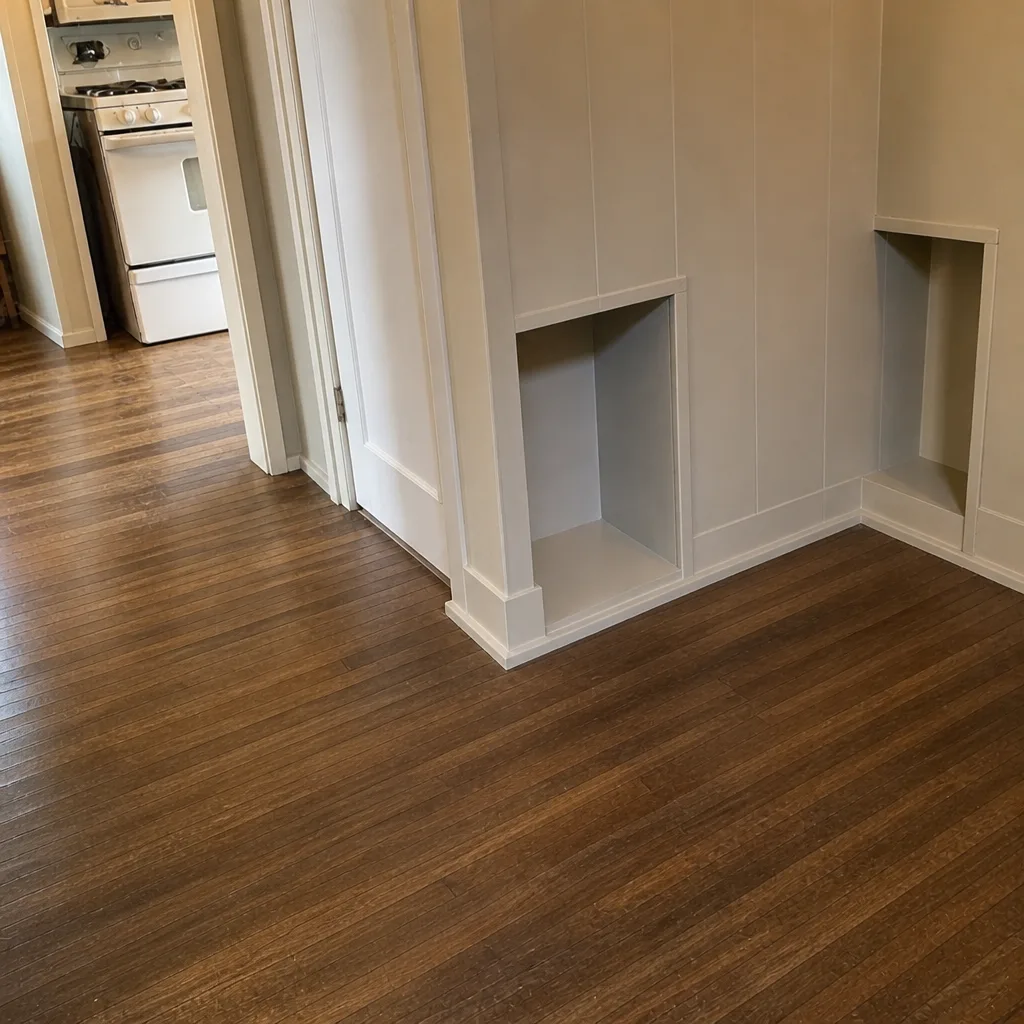 After
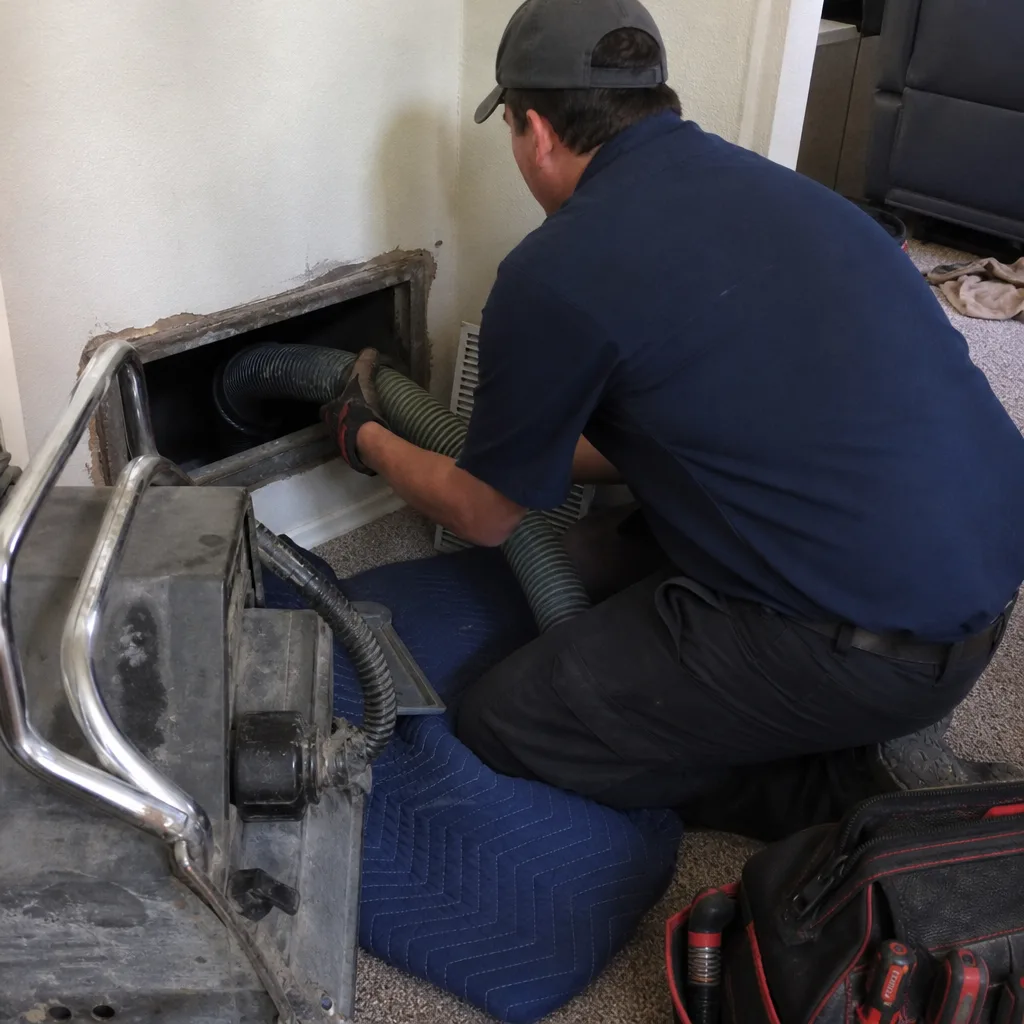 Before
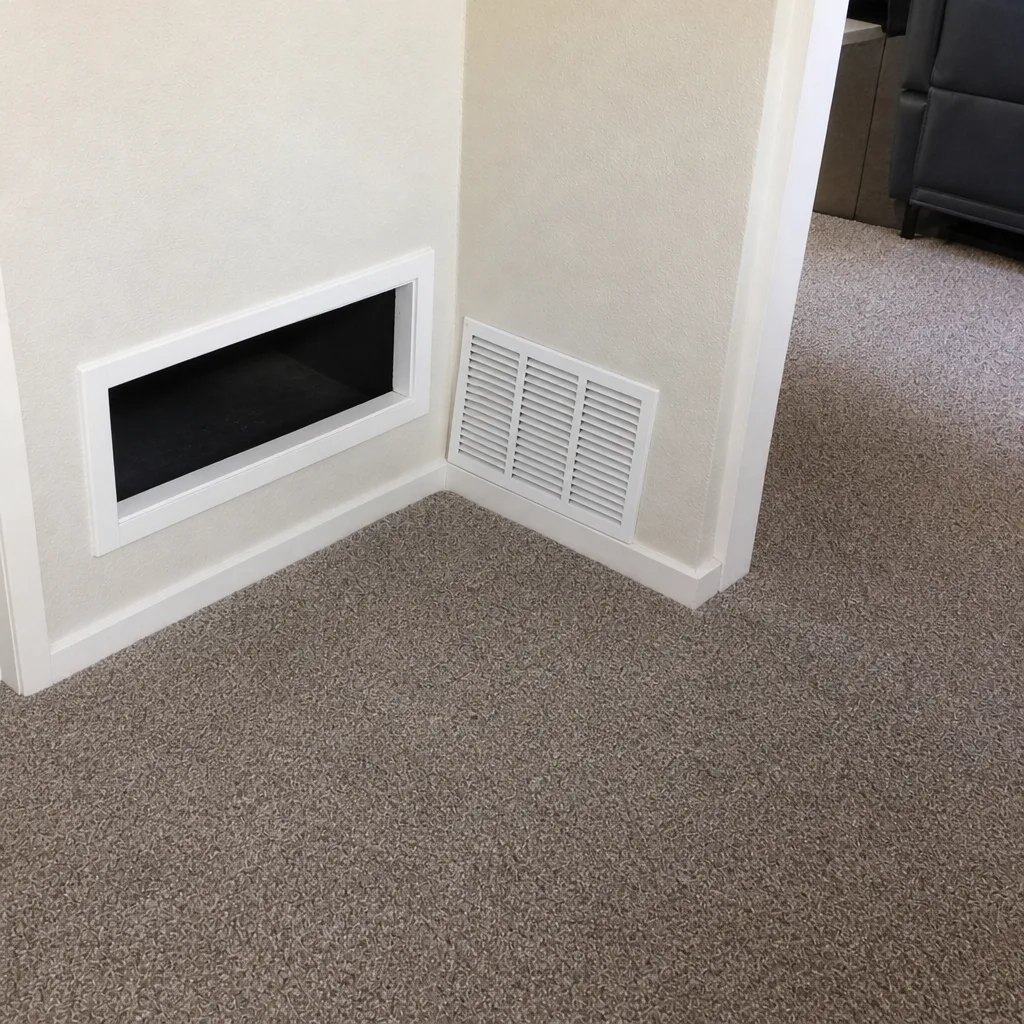 After
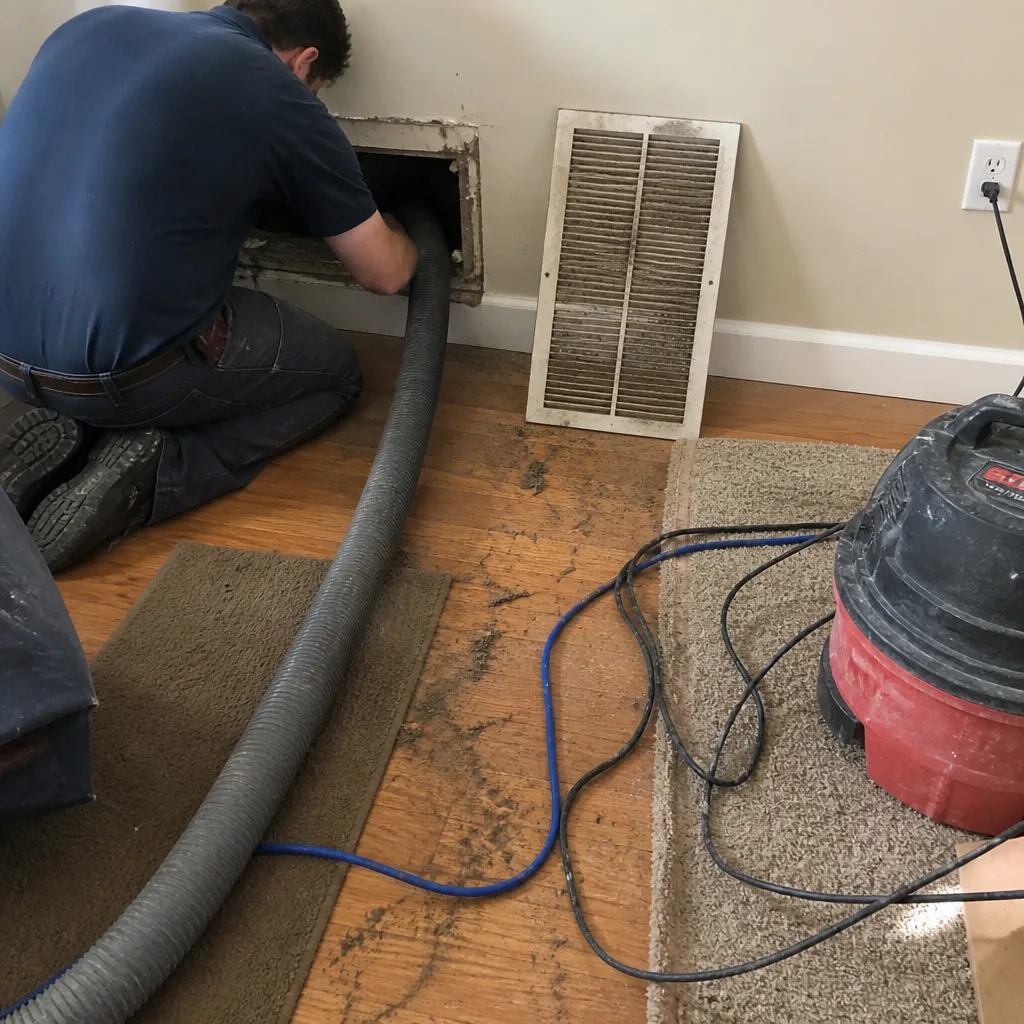 Before
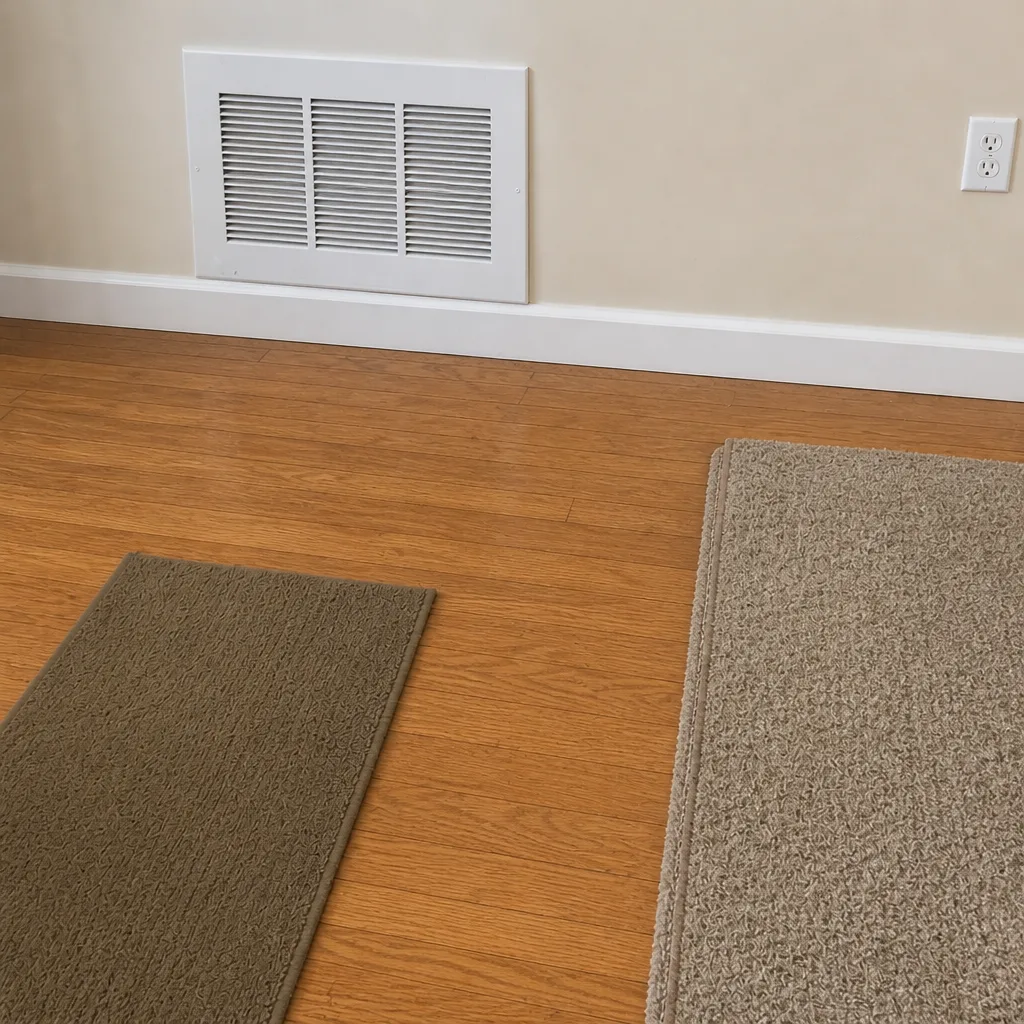 After
When to Call a Professional
Call a professional when the decision chart points to “clean now” or “inspect first,” when you can see visible debris or dark dust coating behind the return grilles, when a musty odor comes on with the heat, or when airflow to some rooms has dropped without an obvious cause. Call sooner after a renovation, a severe smoke season, or any sign the system is pulling air from outside the conditioned space. An experienced eye separates a dirty system from a damaged one, and that changes what the visit involves. Our technicians have up to 10 years of experience. Duct Cleaning Longmont offers free estimates in Longmont, and we work across Longmont and the surrounding area. Call (866) 361-9658. We answer 24/7. Fast dispatch from 7am to 7pm, Sunday through Friday.
Frequently Asked Questions
Every three to five years for a typical household, but every 18 to 24 months if you have pets, smokers, allergy sufferers, recent renovations, or exposure to heavy wildfire smoke seasons. Longmont’s Front Range location means summer smoke events are a real factor, so any home that ran its system through a bad smoke season should move its interval up. If you’re unsure where you fall, call (866) 361-9658 for a free estimate and we’ll tell you honestly.
Yes. Fine smoke particulate enters through the return air, passes the filter, and settles in the duct runs over weeks. The higher your filter grade, the less gets through, which is why upgrading the filter during smoke season is the first step. Filter changes during and after smoke events help, but accumulated particulate in the ducts needs a professional cleaning to remove. Call for an exact quote.
MERV 8 is a reasonable default for most homes, capturing a good range of particulate without over-restricting airflow. Homes with allergy sufferers or heavy smoke exposure can go higher, provided the HVAC system can handle the added resistance. Change it every 30 to 90 days, more often during smoke events and heavy heating cycles. A filter is the cheapest insurance against a shorter cleaning interval.
It can. Added moisture makes dust particles clump together and settle on duct surfaces faster than in a dry-air home. That shortens the effective cleaning interval. If you have an Aprilaire or similar unit, check the pad on schedule and watch for musty odors when the heat comes on. Call (866) 361-9658 for a free estimate on the duct cleaning side.
Vacuuming return grilles helps, but it only reaches the surface layer behind the grille. The deeper runs, the trunk lines, and the branch ducts that serve individual rooms need professional equipment to clean. Rotobrush brush agitation and Nikro HEPA extraction reach what a shop vacuum can’t. Grille vacuuming is a maintenance task, not a replacement for a full cleaning. Call for an exact quote.
It’s often practical to have both done in one visit, since they run on separate schedules and one tends to lapse when the other stays current. The dryer vent carries a fire-safety consideration, so it shouldn’t be skipped regardless. For dryer vent cleaning in Longmont, we handle both jobs with the same technicians. Call (866) 361-9658 for a free estimate.
The Bottom Line
The three-to-five-year rule is a starting point, not a schedule. Your home’s actual interval depends on pets, occupants, renovations, duct material, filter grade, and how much wildfire smoke your system pulled through this past summer. Pets and smoke move you to 18 to 24 months. A sealed home with no pets and good filtration can stretch to five years. Between professional cleanings, change your filter, vacuum the return grilles, and check the dryer vent. Use the decision chart, keep a simple log, and clean when the conditions say to rather than when the calendar does. If the chart points to professional work, get a free estimate before you book. Duct Cleaning Longmont handles air duct cleaning, air duct repair, and dryer vent cleaning through Duct Cleaning Longmont and the surrounding area. Call (866) 361-9658. We answer 24/7. Fast dispatch from 7am to 7pm, Sunday through Friday.
Written by the team at Duct Cleaning Longmont.